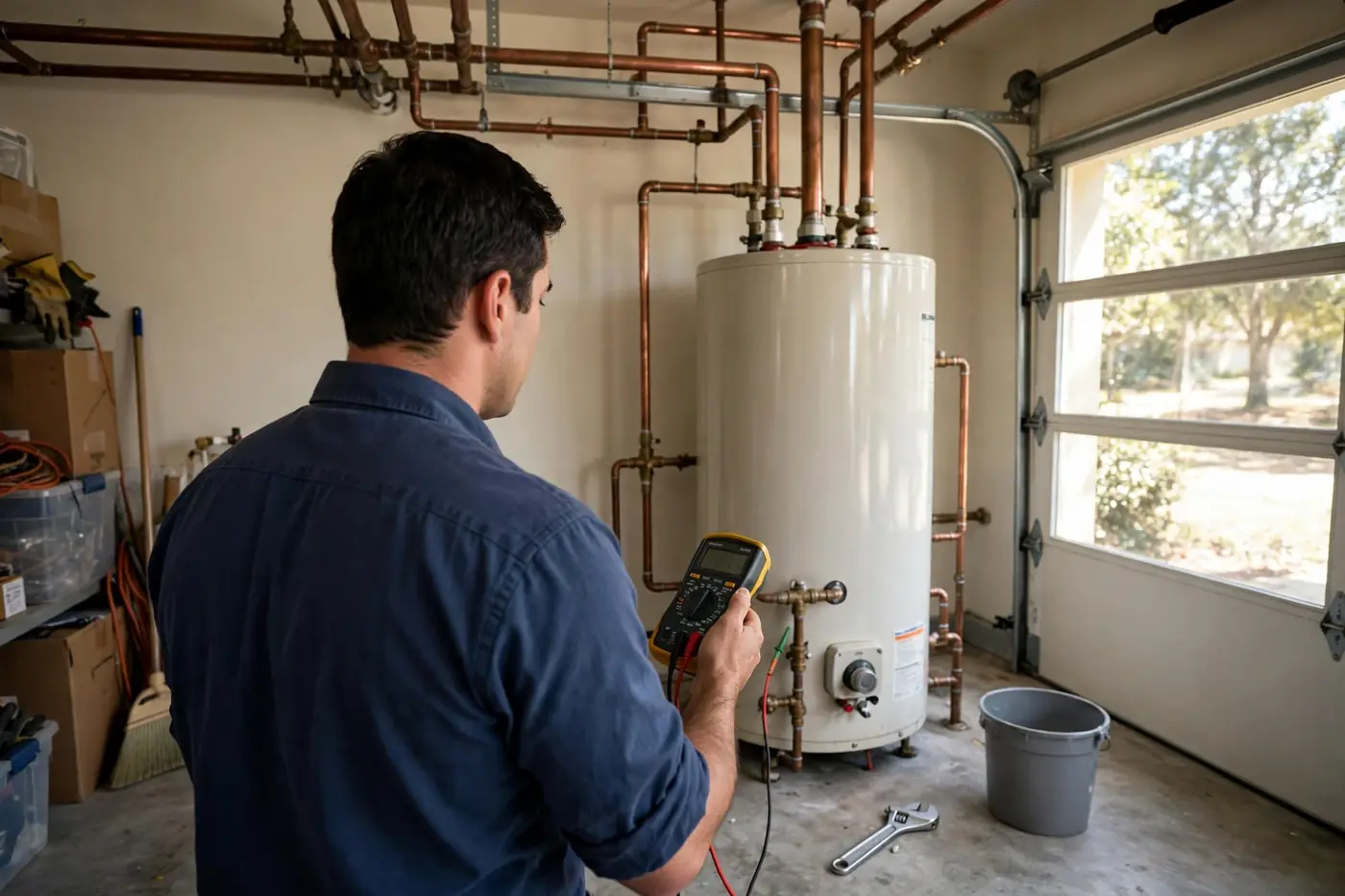
Plumber testing a tank water heater with a multimeter in a Seagoville home garage
Seagoville, Texas · ZIP 75159

Water Heater Repair in Seagoville, TX

A water heater that stops heating, starts leaking or makes noises it never made before usually has a specific cause, and most causes are diagnosable in one visit. Repairs in Seagoville start with the fault: what the heater is doing, how old it is, and whether the hard water here has been at work on it.

Call (833) 382-2711 Water leaking now? Shut off the water to the heater if you can reach the valve safely, then call.

Open Mon-Fri, 7am-6pm

  • Diagnosis first: the fault is found before any work is agreed
  • No hot water, leaks, pilot light faults, noise and rusty water
  • Repair where repair makes sense, replacement where it does not

Water heater repair in Seagoville: the quick answer

Call (833) 382-2711 for water heater repair anywhere in Seagoville, TX. Describe the symptom: no hot water, a leak, a pilot light that will not stay lit, rumbling, rusty water or a tripping breaker. The likely cause is usually clear within minutes, and many repairs are finished in a single visit.

If water is leaking from the tank itself, the heater usually needs replacing rather than repairing. See water heater replacement in Seagoville for that side of the decision.

Start from what you can see

What the symptom usually means

Most people do not search for a service name. They search for what is happening in their home. This table lists the common symptoms, the usual causes and the safe checks to do yourself before you call. These are the common causes, not a diagnosis: the diagnosis happens on site, and gas and electrical work inside the heater is a job for a licensed plumber.

SymptomLikely causeFirst check
No hot water at all (gas)Pilot light out, thermocouple fault, gas supply problemCheck whether the pilot is lit; check other gas appliances.
No hot water at all (electric)Tripped breaker, failed element, thermostat faultCheck the breaker panel for a tripped breaker.
Water not hot enoughThermostat setting, sediment buildup, failing elementCheck the thermostat; note whether it changed suddenly.
Leaking from the baseTank corrosion, loose drain valve, condensationNote where the water starts; a tank-body leak means replacement.
Leaking from the topLoose fitting, inlet or outlet connectionCheck the fittings for drips.
Popping or rumblingSediment boiling in the tankA flush helps; years of buildup may mean replacement.
Rusty hot waterAnode rod used up, tank corrosion startingCheck whether cold water runs clear; hot-only rust points to the heater.
Rotten egg smellBacteria reacting with the anode rodThe anode rod and a flush usually sort it.
Pilot light will not stay litWorn thermocouple, dirty burner, venting problemDo not keep relighting if you smell gas.
Breaker keeps trippingFailing element, faulty thermostat, wiring faultDo not keep resetting a breaker that trips again.
Before you call

Three checks worth doing before you call

These are the safe checks. They take a minute, and the answers make the call shorter and the diagnosis faster.

Check the breaker (electric heaters)

A tripped breaker is the simplest cause of no hot water on an electric heater. Look in the breaker panel for a switch that has moved to the off or middle position. If it trips again after one reset, leave it off and call: something is making it trip.

Check the pilot light (gas heaters)

Look through the viewing window at the base of the heater. No flame means the pilot is out, and a worn thermocouple is the common reason it will not stay lit. If you smell gas, do not relight it: leave the home and call your gas utility's emergency line from outside.

Find the leak's source

Dry the floor around the heater and watch where the water returns. A drip from a fitting or a valve is a repair. Water seeping from the tank body itself means replacement. Where the water starts decides the job.

Safety first: if you smell gas, leave the home and call your gas utility's emergency line from outside. Do not switch lights on or off, and do not relight a pilot. If water is spreading, shut off the water to the heater if you can reach the valve safely, then call (833) 382-2711.

The honest question

Repair or replace: the age rule

Diagnosis first, then the decision. The fault is found and explained before any work is agreed, and the advice follows the fault and the age together. Under 8 years old, repair usually wins. Over 10 years old with a major fault, replacement usually wins. A leaking tank always means replacement, at any age.

The pattern matters too. A heater that has needed two repairs in a year is telling you something, even if each repair was small. And a repair that costs a large share of a replacement, on a heater near the end of its life, is rarely money well spent.

When replacement is the better call →

What the diagnosis covers

Every repair visit starts the same way: the symptom is confirmed, the heater's age and type are checked from the rating plate, and the likely causes are tested in order, from the simplest to the most involved. Only then is the work agreed, so you are not paying for parts the heater does not need.

Call (833) 382-2711
The Seagoville root cause

Why so many Seagoville repairs trace back to hard water

Seagoville tap water measures about 9.5 grains per gallon, firmly in the hard band. Sediment settles at the bottom of the tank, scale coats the elements and burners, and the anode rod is used up faster than it would be in soft water. The result is a set of faults that look unrelated, popping noises, rusty water, less hot water, higher bills, but share one cause.

A repair fixes the fault in front of you. A flush and an anode rod check fix the cause behind it, which is why the visit usually includes a look at both. Annual flushing adds roughly 2 to 4 years to a tank's life, and it is the single most useful habit for a Seagoville heater.

Yearly flushing and anode rod checks →
What hard water doesThe repair call it causes
Sediment settles at the bottom of the tankPopping or rumbling noises, less hot water than before
Scale coats heating elementsWater takes longer to heat, elements fail early
The anode rod is used up fasterRusty or smelly hot water, tank corrosion starting
Valves and fittings fur upStiff shutoffs, drips at connections, low pressure
Urgent, and easy to miss

A leaking heater in the attic is urgent

Texas homes commonly put water heaters in attics, and an attic leak is the one that does the most damage before anyone notices. Water spreads through insulation and ceiling drywall, and the first sign is often a stain on a ceiling below, by which time the leak has been running for a while.

If you find a stain, a damp patch or a drip in the attic, call before it spreads. A drain pan under the heater, with a drain line run to the outside, catches the slow leaks; a heater without one has nothing between a failed tank and the ceiling below. The visit checks the pan and the drain as well as the leak itself.

Freeze damage shows at the thaw

Cold snaps bring their own repair calls. In February 2021, Winter Storm Uri held the Dallas-Fort Worth area at or below freezing for 139 consecutive hours, and freezing pipes were the top cause of property damage in the more than 500,000 insurance claims filed statewide. Splits usually show at the thaw, not during the freeze, so check the attic and garage for drips after a hard freeze, before the heater fires back up.

Exposed pipes in attics and garages, and heaters in unheated spaces, are what fail first. Insulation, working shutoffs and a drain pan are the protection that matters, and a repair visit after a freeze checks all three.

Freeze protection at install time →
Local, and only local

Repair across Seagoville, from new builds to the older core

Repairs cover every part of Seagoville in ZIP code 75159. The older streets around Malloy Bridge Road, Seagoville Road and Kaufman Street carry original heaters that are now 15 to 25 years old, while the newer subdivisions in the north are reaching the age where warranty-expiry faults and first sediment problems start. Either way, one call covers it.

  • Seagoville Farms
  • Edmonds Ranch
  • Stonehaven
  • Cottonwood Creek
  • Santorini
  • Tredway Estates
  • Malloy Bridge Road area
  • Seagoville Road area
  • Kaufman Street area
  • US-175 frontage

See the full breakdown on the Seagoville service area page.

Keep looking

Related water heater services in Seagoville

Not the page you need? These services sit closest to this one, and the hub lists all ten.

Questions

Water heater repair in Seagoville: frequently asked questions

Can a plumber repair a water heater, or does it always need replacing?

A plumber can repair most water heater faults: failed thermostats, elements, thermocouples, gas valves, pressure relief valves and leaking fittings are all repairable. The one fault that always means replacement is a leak from the tank body itself, because a corroded tank cannot be patched. Age decides the rest: a repair on a heater under 8 years old usually makes sense, while a major repair on a heater over 10 years old often does not.

How much does water heater repair cost in Seagoville?

The cost depends on the fault, the part involved, and how easy the heater is to reach. A thermostat or thermocouple is a smaller job than a gas valve, and a heater in a garage is easier to work on than one in a tight attic. Age matters too: a repair on a heater near the end of its life may not be money well spent. Call (833) 382-2711, describe the symptom and the age of the heater, and the likely shape of the job is usually clear within minutes.

Why do I have no hot water all of a sudden?

On a gas heater, the usual causes are a pilot light that has gone out, a worn thermocouple, or a gas supply problem. On an electric heater, it is usually a tripped breaker, a failed heating element or a faulty thermostat. Check the breaker panel first on an electric heater, and check whether the pilot is lit on a gas heater. If the heater is leaking as well, call before anything else.

Can a leaking water heater be repaired?

It depends on where the leak starts. A leak from a fitting, a valve or a connection can usually be repaired. A leak from the tank body itself cannot: the tank has corroded through, and the heater needs replacing. Note where the water is coming from before you call, and shut off the water to the heater if you can reach the valve safely and the leak is spreading.

Why does my water heater keep tripping the breaker?

On an electric heater, a breaker that keeps tripping usually points to a failing heating element, a faulty thermostat or a wiring problem. It is not a reset-and-forget fault: a breaker trips because something is wrong, and resetting it again and again can make it worse. Leave it off and call, and describe when the tripping started and whether the heater is old.

Why is my water heater making popping or rumbling noises?

In Seagoville hard water, popping and rumbling almost always mean sediment boiling at the bottom of the tank. The water here measures about 9.5 grains per gallon, and sediment builds up fast in a tank that is never flushed. A flush helps if the buildup is caught early. Years of sediment can overheat the bottom of the tank and shorten its life, so the noise is worth acting on rather than living with.

How long does a water heater repair take?

Many repairs are finished in a single visit, once the fault is diagnosed. A part replacement on an accessible heater is usually quick. A repair that needs a part ordered in, or a heater in a difficult attic space, takes longer. The diagnosis comes first in every case: the fault is found and explained before any work is agreed.

Should I repair or replace my water heater?

Use the fault and the age together. A leaking tank always means replacement. A part fault on a heater under 8 years old usually means repair. A major fault on a heater over 10 years old, or a heater that keeps breaking down, usually means replacement. If the heater is past ten years and the repair is a large one, replacement is usually the better use of the money.


No hot water, a leak, or a noise that was not there yesterday?

Describe the symptom: the cause is usually clear in minutes

One call, one diagnosis, and a straight answer on whether the heater can be repaired or needs replacing.

Call (833) 382-2711
Call (833) 382-2711
Call (833) 382-2711